
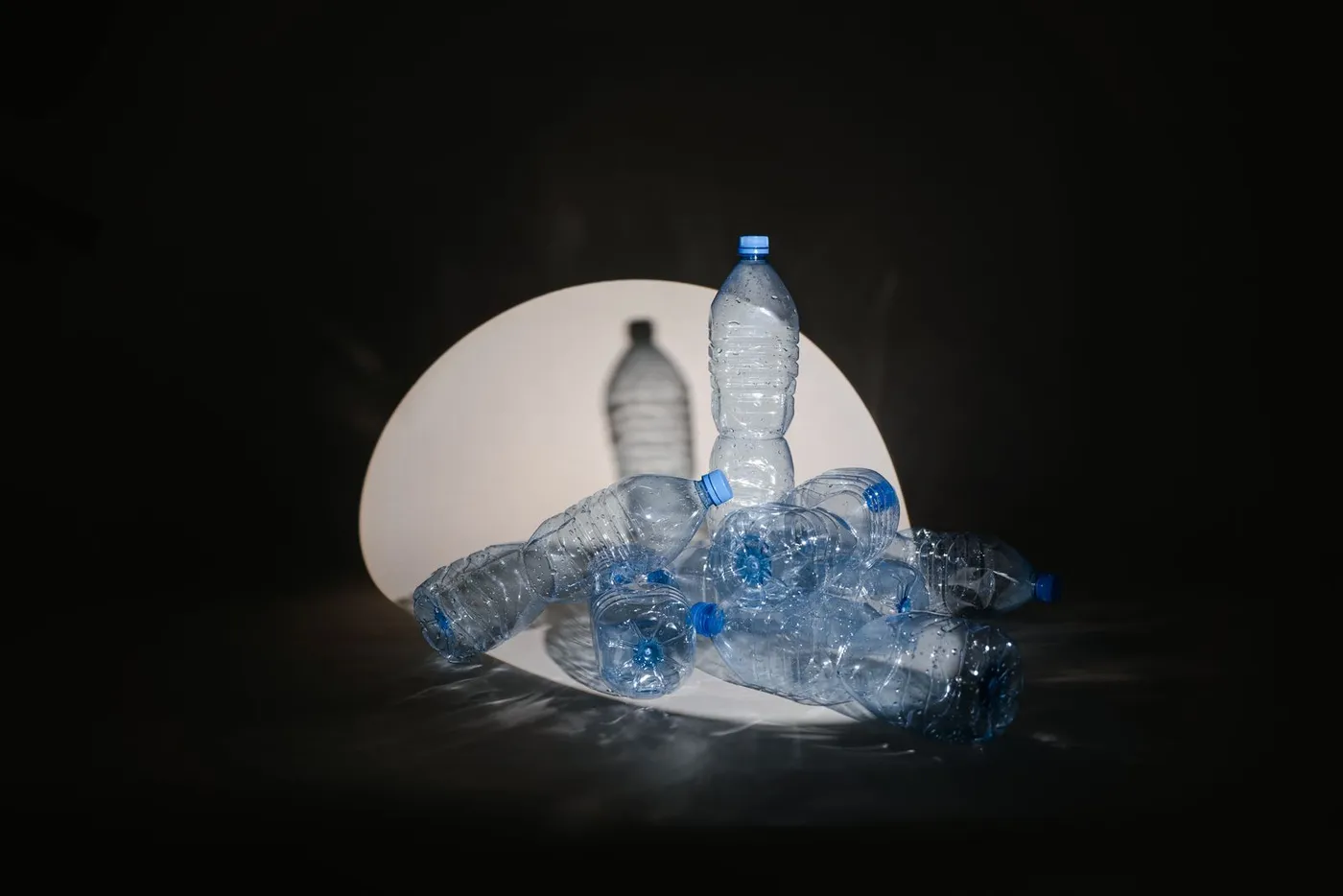
The widely repeated 240,000-particles-per-liter figure describes an estimate from a particular bottled-water study. It is not a measurement of every bottle, your personal intake, or the amount that reaches your organs. The researchers used a newer imaging approach on samples from three brands; their work investigated detection and characterization, not illness in people drinking the water. Qian et al., 2024
What the number means
The study combined stimulated Raman scattering microscopy with a polymer-identification algorithm. Its estimate was about 240,000 micro- and nanoplastic particles per liter, with substantial variation; about 90% of the identified particles were in the nanoplastic size range. The result depends on the sampled bottles, the polymers searched for and what the method could detect. Study methods and results
A useful way to keep the headline honest is to attach three questions: Which samples? Which particle sizes? Which identification method? If those details disappear when the number is repeated, the claim has become less informative.
Why older counts look different
A 2018 investigation examined 259 bottles from 11 brands. It used fluorescent staining and confirmed the identity of larger particles with infrared spectroscopy; its smaller stained particles were not individually confirmed in that way. The authors also reported variation between bottles and lots. Mason et al., methods and discussion
Those methodological differences matter. Comparing a newer small-particle count with an older larger-particle count does not, by itself, show that the water became more contaminated between the two publication dates. The studies did not run a matched, long-term comparison of the same bottles with the same instrument.
What to do with the finding
Use it as a reason to ask better questions about water choices, rather than as a verdict on every source of drinking water. Before choosing a filter, write down the problem you want it to address, check evidence for the exact model, and include replacement cartridges and maintenance in the decision.
We do not use this bottled-water paper to certify a filter, rank all tap water above all bottled water, or promise a health benefit from changing bottles. A product recommendation needs its own evidence.
Our filtration guide explains the questions to ask. If you want the broader context first, read microplastics explained.
Updated September 11, 2026: removed unsupported claims about a universal exposure ranking, health effects and complete filtration.